
MARS Aviation

Why Dubai World Central

The strategic case for aviation infrastructure at DWC

A region driving global aviation growth

The Middle East is the fastest-growing aviation region in the world. Airbus projects the regional fleet will rise from approximately 1,480 aircraft today to roughly 3,700 by 2044, with the region's share of the global fleet expanding from 5.3% to 6.7% by 2035. Oliver Wyman forecasts Middle East commercial fleet growth at an annual rate of 5.1% through 2035 — nearly double the 2.8% expected globally over the same period.

The four largest GCC carriers — Emirates, Etihad Airways, Qatar Airways, and Saudia — have collectively placed close to 780 aircraft orders with Boeing and Airbus, and Middle East passenger demand is projected to grow by 23% between 2025 and 2030.

The region is no longer a transit pass-through; it is a permanent center of gravity for global aviation.
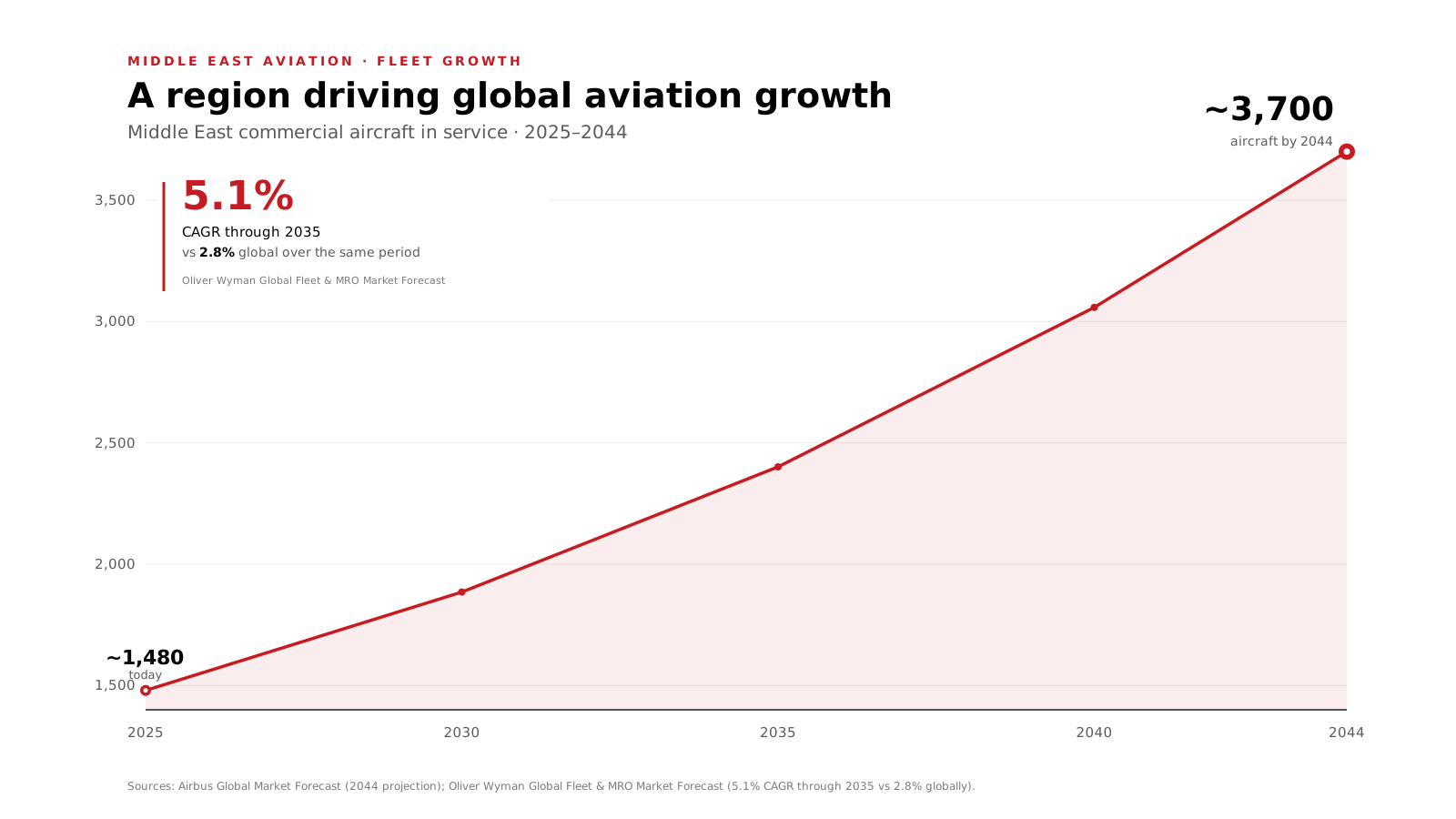
Middle East fleet trajectory — Airbus / Oliver Wyman projections to 2044

5.1%

vs 2.8%

Middle East commercial fleet CAGR vs global rate through 2035 (Oliver Wyman)
A structural MRO capacity gap

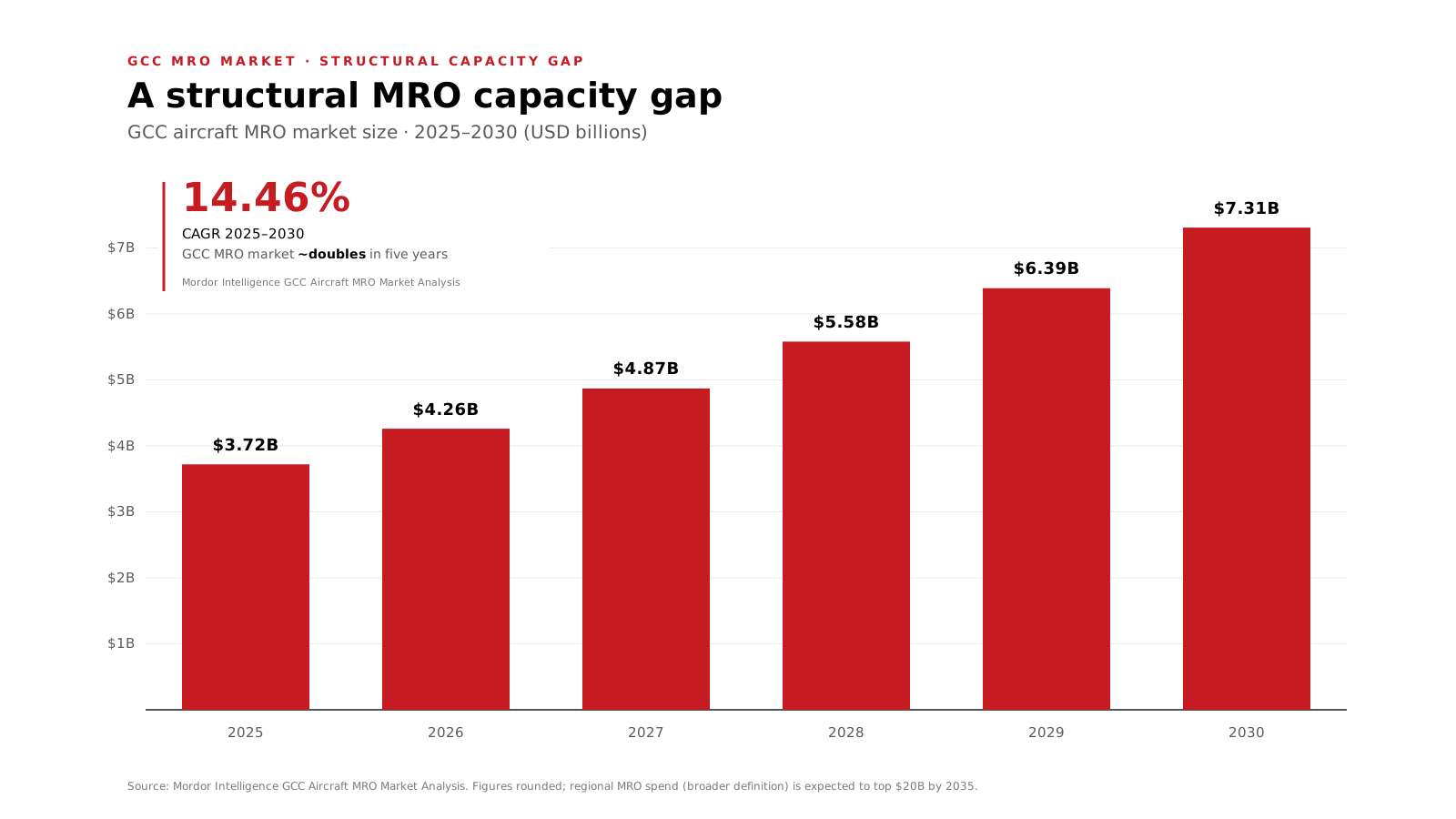
Fleet expansion on this scale creates structural demand for in-region maintenance, repair, and overhaul capacity that the existing footprint cannot meet. The GCC aircraft MRO market is forecast to grow from $3.72 billion in 2025 to $7.31 billion by 2030, a compound annual growth rate of 14.46%, and regional MRO spend is expected to top $20 billion by 2035.

Yet a substantial share of heavy maintenance for regional fleets continues to be performed in Europe, Asia, and the United States, exposing operators to lead times, logistics costs, and supply chain risk that grow with the regional fleet itself. The talent base is similarly concentrated: only 22% of aircraft maintenance engineers in the GCC are local nationals, leaving the region structurally dependent on imported technical capacity.

Closing this gap with regional infrastructure is not a speculative thesis — it is a documented commercial opportunity actively pursued by carriers, lessors, and OEMs.

GCC aircraft MRO market growth 2025–2030 — Mordor Intelligence

14.46%

to 2030

GCC aircraft MRO market CAGR — $3.72B (2025) to $7.31B (2030) (Mordor Intelligence)

Dubai World Central — Dubai's aviation hub for the next four decades

DWC is positioned to become the world's largest airport. Phase 2 of the expansion, approved by Dubai's leadership in April 2024 and projected at approximately AED 128 billion (US$35 billion), will deliver five parallel runways, more than 400 aircraft gates, and ultimately the capacity to serve 260 million passengers annually with 12 million tonnes of cargo.

DWC's near-term target is to handle 150 million passengers annually within the next decade. Emirates and the broader Dubai aviation ecosystem will progressively relocate from Dubai International (DXB) to DWC, consolidating Dubai's long-term aviation activity at the new airport.

Building MRO and aviation support infrastructure at DWC means siting capacity at Dubai's strategic aviation hub of the next four decades, not its previous one.

5
parallel runways
400+
aircraft gates
260M
passengers / year
12M
tonnes cargo / year

Aligned with national industrial strategy

The development of in-region aviation infrastructure aligns directly with the UAE's Make in the Emirates industrial agenda and the National Strategy for Industry and Advanced Technology. Aerospace is explicitly identified as a priority sector, with the National In-Country Value (ICV) Programme connecting demand to domestic manufacturing capability and supporting the localization of more than 5,000 products across priority industries.

Recent moves by Emirates Engineering — including a Design Organization Approval from the GCAA covering major cabin reconfigurations and complex design changes, alongside agreements to build local capabilities such as Trent 900 fan-case repair facilities — reflect the same direction of travel.

The UAE is committing to in-country aviation capability at the national strategic level, not as diversification rhetoric.

Why MARS, why DWC, why now

MARS's hangar complex sits at the intersection of three converging forces: a regional fleet expanding at roughly twice the global rate, a structural MRO capacity gap that has been documented for years and is now widening, and an airport being purpose-built to carry Dubai's aviation activity for the next four decades — supported by an explicit national policy framework for aviation localization.

The development of integrated MRO and aviation support infrastructure at DWC is not a speculative bet on regional growth. It is the build-out that regional growth requires.

Sources & References

The data and projections referenced in the Why DWC section are drawn from the following sources, current as of the most recent published data at time of writing. Figures are subject to revision in line with the publishing organizations' annual updates.

  • Airbus Global Market Forecastfleet projections and regional demand growth
  • Oliver Wyman Global Fleet & MRO Market ForecastMiddle East fleet growth rates and MRO spend trajectory
  • Mordor Intelligence GCC Aircraft MRO Market AnalysisGCC MRO market sizing and CAGR
  • Dubai Airports communications and industry briefingsDWC expansion specifications and timelines
  • UAE Ministry of Industry and Advanced Technology (MoIAT) — Make it in the Emirates 2026National Industrial Strategy and ICV Programme references
  • Dubai Government announcementsDWC Phase 2 expansion approval (April 2024)
  • Emirates Group communicationsEmirates Engineering capability development announcements

For the most current figures, please refer to the source organizations directly.